BIM
Understanding BIM in architecture
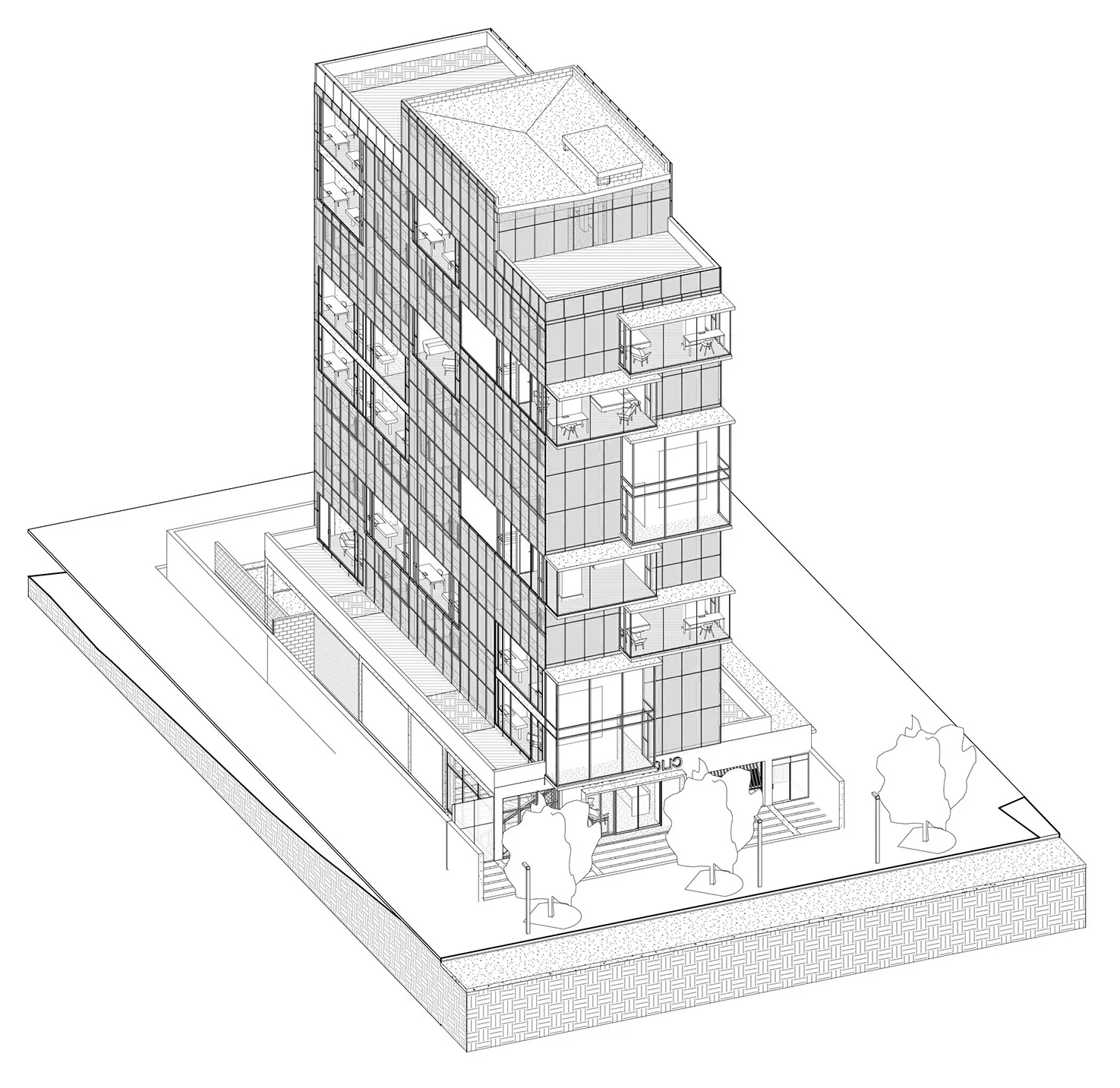
Building information modelling (BIM) is a method for simulating real-world conditions with a shared virtual model. Collaborative software allows people working on a project to store and exchange relevant information and documentation in real time throughout its life cycle. BIM can make architecture more efficient, sustainable and economical in both time and cost.
Architectural BIM models can specify real products and materials intended for construction, including their geometry, properties and specifications. Everyone working on the project in BIM can share detailed information and contribute to finding the right solutions for the building.
Virtual models support quantity take-offs, planning, coordination, management and access to information at every stage of a building project.
BIM therefore encompasses the visual representation and geometry of a building as well as the relationships and attributes of its elements. It helps test structural feasibility, predict performance and prevent problems later in the project.
Why BIM matters
BIM has gained traction worldwide because of these advantages and is mandatory in some countries. Where BIM is still in its early stages, demand is already growing and governments are developing initiatives to support its adoption.
BIM expertise can give an architecture practice an advantage in the architecture, engineering, construction and operations (AECO) market. It can offer a fresh way to position the practice by making work more collaborative, sustainable and efficient in time and cost. A practice that uses BIM can respond more effectively to changing market needs, while practices that have yet to adopt it may fall behind as the sector digitises.
Software for BIM in architecture
When a company takes on a BIM project, it needs to understand the available software and its capabilities and choose the best fit for that project, including compatibility with other tools.
Leading BIM tools in architecture include ArchiCAD, Bentley Architecture, Revit Architecture and Vectorworks Architect.